Technology
How to collect Mobile money Payments in Africa
Damilola Oyelere
Dec 11, 2025
3 minutes
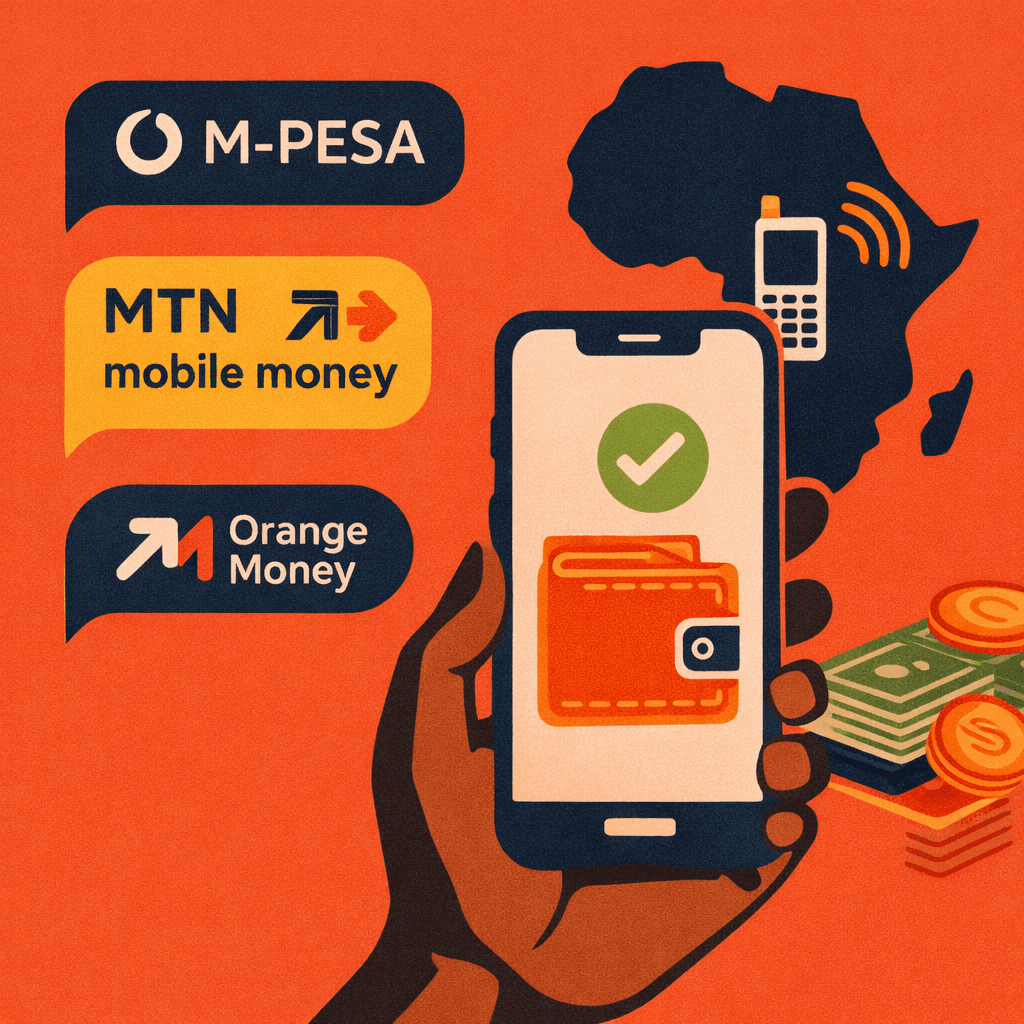
Mobile money has emerged as one of the most important payment methods in Africa’s digital economy. Mobile wallets, powered by telecom operators and fintech platforms, have captured a significant share of the market traditionally dominated by traditional banking in many regions, enabling millions of consumers, including the unbanked, to send, receive, and spend money via their mobile phones.
For businesses looking to operate in Africa, understanding how to collect mobile money payments is essential. This guide breaks down the core ways companies can accept mobile money across the continent, the systems and infrastructure involved, and provides practical steps for implementation.
1. Mobile Money: What it is and why it matters
Mobile money refers to digital wallets linked to user’s mobile numbers, which enable them to perform financial transactions without traditional bank accounts. These wallets are offered by mobile network operators (MNOs) such as Safaricom’s M-Pesa, MTN Mobile Money, Airtel Money, Orange Money, and many others.
Across countries like Kenya, Ghana, Uganda, and Nigeria, mobile money services are deeply embedded in everyday commerce. In Kenya alone, up to 94% of the population uses mobile money, making it one of the most widely adopted digital payments in Africa. Mobile money matters because:
It removes the need for bank accounts or cards for both consumers and businesses.
It expands access to digital payments for large unbanked populations.
It enables instant, low-cost transactions that support commerce at all scales, from small shops to large online platforms.
2. Popular Mobile Money networks across Africa
Most African countries have one or more dominant mobile money providers. These include:
M-Pesa (Safaricom): Extremely popular in Kenya and Tanzania, widely accepted for P2P and business payments.
MTN Mobile Money: Available across West and East Africa, used for payments, remittances, and merchant services.
Airtel Money: Used in multiple markets, including Uganda, Tanzania, and Nigeria.
Orange Money: Popular in Francophone Africa (e.g., Côte d’Ivoire, Senegal).
EcoCash (Zimbabwe), Vodafone Cash (Ghana), Paga (Nigeria): Local wallets with significant user bases.
These services allow users to make payments using USSD codes, mobile apps, QR codes, or APIs, depending on the provider and the user’s device.
3. Basic ways to accept Mobile Money payments
a. Payment Codes and USSD
USSD (Unstructured Supplementary Service Data) is a text-based interface that works on all phones, even without internet access. Customers dial codes like *123# and follow prompts to send payments from their wallets.
Benefits:
Works on keypad phones, no smartphone or data needed.
Ideal for businesses without online platforms or POS systems.
Limitations:
Manual entry can be slow for merchants during high-volume sales.
Typically not ideal for automated online checkout flows.
b. Mobile wallet accounts and Merchant tills
Most mobile network operators and telecom-led financial service providers that run mobile money systems let merchants open mobile money business accounts (tills). These are dedicated wallets that accept customer payments and can be linked to Mobile money apps, POS devices, and Invoicing systems. Customers can pay through their mobile wallet accounts to businesses' mobile money business accounts, also known as Merchant tills
For example, Safaricom’s M-Pesa still allows businesses to receive recurring payments or one-off purchases directly into their merchant wallet. This method is widely used by retail stores, marketplaces, service providers, and informal vendors.
Benefits
Easy to set up compared to traditional banks and accessible to small business owners, traders, vendors, and startups
Transactions are instant or usually within a few minutes, unlike some card systems
Easily integrates with POS and invoicing tools, making it easy to use in small retail operations
Merchant tills can accept payment through USSD, SIM toolkit, QR codes, etc, which makes them ideal to use in rural and offline areas
Limitations
Doesn't work with Cross-border payments as a mobile account wallet and merchant till is specific to one country, one currency, and linked to one regulatory and telecom operator system
Most tills are built for in-person payments and offline transactions; they lack robust APIs, webhook automation, or a scalable checkout system, which makes them unsuitable for SaaS, E-commerce/Marketplaces, and subscription services
Merchant tills are built for traders and small business owners and can't operate high transaction volumes and multi-country operations
Most mobile money tills do not handle compliance and taxes, which becomes an issue for international companies or businesses that provide services to international customers
c. QR Codes
QR payments are increasingly used in urban areas. Merchants display a QR code linked to their mobile money wallet, enabling customers to scan and pay instantly via their mobile wallet app.
Benefits:
Contactless and fast for in-store payments
Reduces errors in entering phone numbers or amounts
Limitations:
Requires smartphone and app, less ideal for basic phone users
d. Online Checkout Integration (APIs)
For e-commerce and digital businesses, the most effective way to collect mobile money payments is through API integrations. Payment APIs allow you to connect your website or app to multiple mobile money providers with a single setup.
Examples include:
Integrating directly with M-Pesa or MTN Mobile Money APIs
Using a unified payment API from fintech gateways (e.g., Flutterwave, DusuPay) that support multiple wallets and channels simultaneously.
Benefits:
Seamless customer experience with minimal redirects
Automated reconciliation and reporting
Works for online marketplaces, SaaS, and subscription billing
Limitations
Technical issues like errors, security compliance, version updates, and general maintenance can sometimes prevent it from working properly
Fragmentation across different countries and mobile network providers, collecting payments across five countries, will require you to enable five separate integrations.
Low success rate will occur with foreign or non-local merchants (merchants from another African country) due to APIs not routed through local rails
e. WhatsApp Business API with Mobile Money
Platforms like the WhatsApp Business API now support mobile money payment flows, allowing customers to pay directly through chat without leaving the app.
Benefits
Many Africans already use WhatsApp as a primary communication channel.
It enables catalogs, payment links, and transaction confirmations in one interface.
The API provides real-time payment confirmation within the chat
Useful for Small businesses to grow with limited infrastructure
Limitations
Payment confirmation doesn't handle compliance and taxes
It only supports mobile money wallets or linked cards
It only works in specific countries with specific mobile money providers. Cross-border payments are not supported
4. Platforms and Gateways that simplify Mobile money collection
Rather than handling separate integrations for each wallet and country, businesses can use payment platforms that unify multiple payment methods through one integration:
a. Anchor
Anchor lets merchants collect payments from leading mobile wallets such as M-Pesa, MTN Mobile Money, Airtel Money, Tigo Pesa across 17+ African countries via a single integration. It offers real-time tracking and settlement.
b. Flutterwave
A pan-African payment gateway that supports local mobile money, cards, and bank transfers through flexible APIs. It connects merchants to 34 African countries and powers millions of transactions.
c. Paystack
A developer-friendly payment gateway widely used in Nigeria and Ghana, supporting cards, bank transfers, and mobile wallets.
d. Other Gateways
APIs such as DusuPay, KKiaPay, and solutions provided by local fintechs allow businesses to handle mobile money alongside traditional payments with minimal technical setup.
5. Best Practices for Collecting Mobile Money Payments
a. Offer multiple payment channels
Customers prefer choice. Businesses should support:
Mobile wallets
QR codes
USSD codes
Cards and bank transfers
Platforms that unify these improve conversion and reach.
b. Automate reconciliation
Manual tracking of mobile money payments can lead to errors. Use gateways that provide real-time notifications, settlement reports, and dashboards to streamline accounting.
c. Local currencies and wallet preferences
Each market has a dominant wallet. Learn which mobile money providers are preferred in your target regions and ensure they’re integrated.
d. Leverage messaging Apps
Payment links and automated transactions via WhatsApp and SMS help reach customers in low-connectivity environments.
6. Challenges and Considerations
While mobile money has transformed payments across Africa, businesses looking to scale beyond a single market must understand the structural challenges that still exist. These challenges are not deal-breakers, but they require the right strategy and tools to navigate effectively.
a. Interoperability
Historically, mobile money systems across Africa were built as closed ecosystems. Each wallet such as M-Pesa, MTN MoMo, Airtel Money, or Orange Money, operated independently, meaning users could not easily send money across different providers or networks.
This created friction for both consumers and businesses:
A customer on one network could not pay a merchant on another.
Businesses had to support multiple wallets separately.
Payment reconciliation became complex.
Today, interoperability is improving. Some countries now support wallet-to-wallet transfers across providers, and regional initiatives are enabling broader financial connectivity. However, this progress is uneven and still limited in many markets.
For businesses, this means:
You may still need multiple integrations to cover a single country.
Payment success rates can vary between providers.
User experience can differ based on the network.
Interoperability is improving, but it is not universal, and businesses must plan for this reality.
b. Cross-border payments
Mobile money systems were designed primarily for domestic use. They work well within a single country but are rarely built for cross-border commerce.
This creates several challenges:
A Kenyan M-Pesa wallet cannot directly pay a Nigerian MoMo wallet.
Each wallet operates in its local currency.
Settlement rules differ by country.
FX conversions are often unsupported or expensive.
For businesses selling across borders, this means you cannot rely on native mobile money systems alone. You need specialized fintech partners or infrastructure that can:
Handle currency conversion
Manage cross-border settlement
Aggregate payments across countries
Ensure regulatory compliance
Without this, businesses face delayed settlements, higher costs, and complex treasury management.
c. Security and Compliance
Payments are not just a technical problem, they are a regulatory one.
Every African country has its own rules for:
Data protection and privacy
Anti-money laundering (AML)
Know-your-customer (KYC)
Consumer protection
Transaction reporting
If you are collecting mobile money across multiple countries, you must comply with all of these frameworks simultaneously.
This is especially challenging for foreign businesses, because:
Regulations change frequently
Requirements differ by sector
Enforcement varies
Non-compliance can result in fines, frozen funds, or shutdowns
Simply connecting to a mobile wallet does not make you compliant. Compliance must be built into the payment infrastructure itself.
The hidden challenge: Fragmentation
While mobile money is widespread, Africa’s payment ecosystem is highly fragmented:
Different mobile wallets per country
Different regulations and tax requirements
Different currencies and settlement rules
Separate integrations for each market
Traditionally, businesses needed:
A local company in each country
Local bank accounts
Individual payment integrations
Separate tax filings
This complexity has slowed expansion until modern platforms emerged.
How Startbutton simplifies Mobile money collection in Africa
Startbutton removes the complexity of collecting mobile money across Africa by acting as a Merchant of Record (MoR).
Instead of registering local entities or integrating multiple wallets, businesses can collect mobile money payments across African markets through one platform.
1. Collect Mobile Money without a local company
With Startbutton:
You do not need to register a company locally
You do not need local bank accounts
You do not handle tax filings
Startbutton becomes the Merchant of Record, legally selling on your behalf while you focus on your product and growth.
2. Access local Mobile money methods instantly
Through Startbutton, businesses can collect payments via:
Mobile wallets (MTN MoMo, M-Pesa, Airtel Money, etc.)
Bank transfers
Cards
USSD
Digital wallets
All through a single integration, optimized for local success rates.
3. Seamless checkout for African customers
Startbutton provides:
Localized checkout experiences
Payment links and APIs
Mobile-first flows designed for African users
This reduces payment friction and increases completion rates.
4. Automated compliance & Tax handling
Mobile money collection often triggers VAT obligations, Regulatory reporting and Withholding requirements. Startbutton handles:
VAT and indirect taxes
Regulatory compliance
Invoicing and reporting
You receive clean, compliant payouts without operational overhead.
5. Easy Multi-Currency Settlement
Businesses can get paid in USD, GHS, ZAR, KES, and other supported currencies. This removes FX complexity while still allowing customers to pay in their local currency via mobile money.
Conclusion
Mobile money is an important aspect of digital payments across Africa. Whether you are a retailer or a global SaaS provider, you can collect mobile money payments by:
Using mobile wallets and merchant tills
Implementing APIs for seamless online checkout
Leveraging unified payment platforms
Integrating with messaging-based payments
By tapping into Africa’s mobile money ecosystem, businesses gain access to millions of customers who transact digitally without needing traditional bank accounts or cards. This not only expands reach but also helps scale faster in a market where mobile money adoption is growing faster than most other payment technologies.
While traditional methods require local setup, compliance management, and multiple integrations, modern platforms like Startbutton make it possible to:
Collect mobile money payments across Africa
Stay compliant
Scale faster
Enter new markets with lower risk
For companies expanding into Africa, mobile money isn’t just a payment method — it’s the gateway to growth.