Business tips
Why you should expand your business into Africa
Damilola Oyelere
Dec 3, 2025
3 minutes
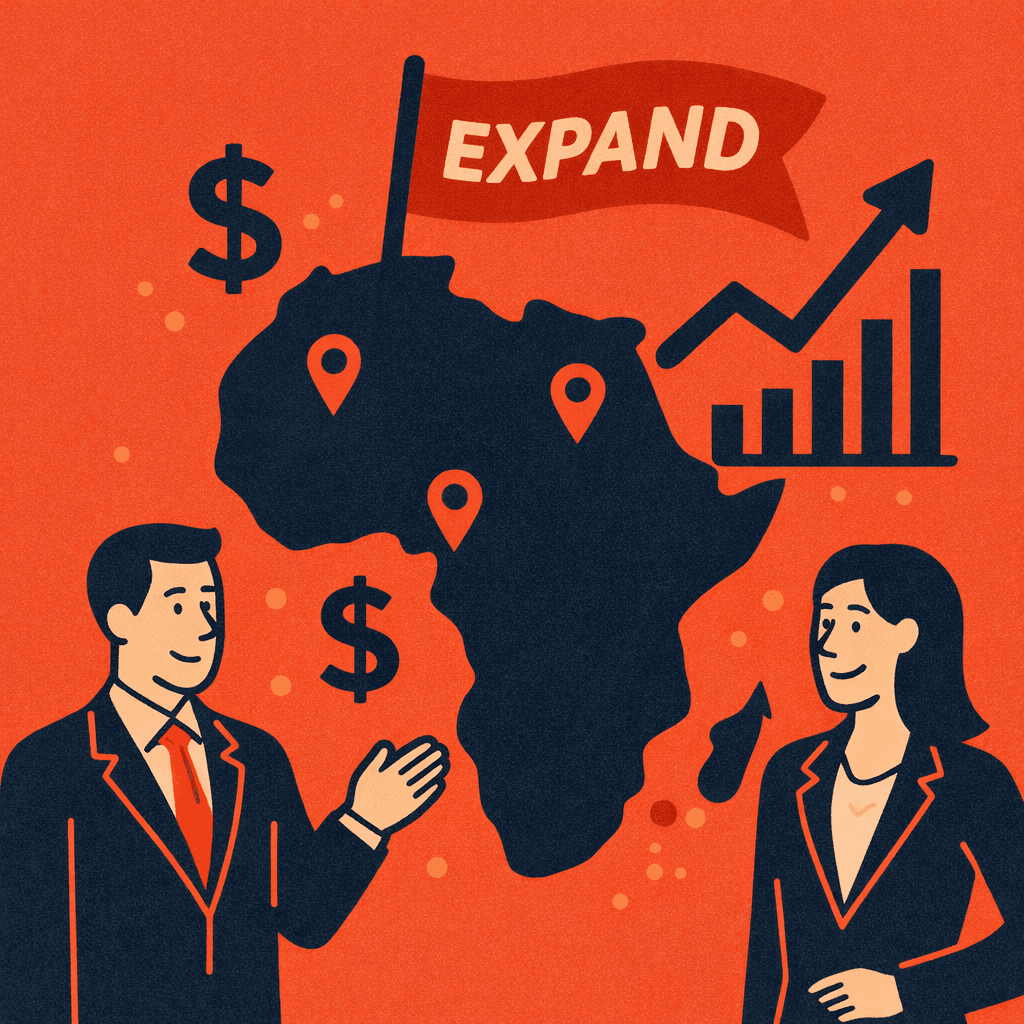
The days when Africa was referred to as the future of commerce are long gone; it is happening now. Today, Africa stands as one of the world’s most dynamic economic regions, driven by demographic growth, accelerating digital adoption, and structural reforms that are reshaping how business is done across the continent.
Africa’s economy is projected to grow by 3.9% in 2025 and 4.0% in 2026, outpacing most global regions except Asia. This growth is supported by macroeconomic reforms, infrastructure investments, technology adoption, and increasing diversification beyond commodities. While Africa remains the most fragmented continent in the world, which is largely characterized by regulatory complexity, multiple currencies, uneven infrastructure, and low intra-continental trade, it has continued to develop despite these structural challenges.
With 54 countries, over 41 currencies, and roughly 30% of the world’s mineral resources, Africa is not a single market but a network of interconnected economies at different stages of development. Initiatives such as the African Continental Free Trade Area (AfCFTA) are actively reducing trade barriers and encouraging cross-border commerce, making Africa increasingly attractive for businesses looking to scale internationally.
This article explains why Africa represents one of the most compelling expansion opportunities today, where the growth is coming from, which markets are most attractive, the challenges businesses face, and how modern expansion models, such as the Merchant of Record (MoR), make entering Africa faster, cheaper, and less risky than ever before.
Why Africa is a market shaped for Growth
Strong economic development across multiple regions
Africa’s economic growth is not limited to one country or sector. Several African economies are scaling rapidly, driven by natural resources, infrastructure development, services, and technology.
Senegal recorded GDP growth of 8.3% in 2024, driven by oil and gas production and major infrastructure investments.
Rwanda continues to rank among Africa’s strongest performers, with steady growth supported by services, tourism, and ICT.
Niger emerged as the fastest-growing economy in Africa in 2024, with real GDP growth of 10.4%, largely due to oil sector expansion and pipeline infrastructure.
These examples reflect a broader trend across the continent: growth is no longer commodity-dependent alone. Economic diversification into ICT, services, manufacturing, agriculture, and digital trade has made African economies more resilient than in previous decades.
The AfCFTA further strengthens this trajectory by promoting intra-African trade, simplifying customs procedures, and enabling businesses to serve multiple African markets more efficiently.
One of the youngest populations in the world
With less than 60% of Africans under 25 years of age as of 2023/25, compared to other regions like Asia and Latin America and the Caribbean, which have less than 27%, 22% and 24% of their population under 15 years of age, and Europe and North America having the oldest population. This shows the agility and strength of the workforce presently in Africa, informing a potential source of immense economic growth and innovation, a unique advantage compared to aging populations in other continents.
This youthful population helps to grow a high consumer base, which is influenced by a larger domestic market for goods and services, higher household incomes, and enhanced savings potential. Young Africans are also making strides in innovation and entrepreneurship due to an increase in the rate of literacy in the past decades. Entrepreneurial young individuals fuel the economy’s growth in youth-led startups, Micro, Small, and Medium Enterprises (MSMEs) sector, which generates a majority of jobs.
Accelerating digital adoption
Africa is experiencing a digital transformation at a high rate. Internet usage is projected to reach 1.1 billion users by 2029, up from approximately 645 million users in 2023. This growth is driven primarily by mobile connectivity, which accounts for over 74% of web traffic across the continent.
The expansion of 4G and 5G networks, cheap smartphone costs, and widespread mobile-first behavior have fueled innovation across E-commerce, Fintech, and digital payments, SaaS and cloud services, Digital education, and healthcare
Digital adoption has also improved access to essential services, created new jobs, and supported poverty reduction. Businesses can now enter African markets digitally through online platforms, social media, and mobile-based solutions without heavy physical infrastructure.
Language adoption has further enabled this growth. English, French, and Arabic serve as common business languages across many regions, lowering barriers for cross-border digital products.
Middle-class spending power.
The middle class is reshaping Africa's consumption patterns; there is high demand for more and diverse goods and services. One report projects that by 2030, Africa’s middle class could comprise 1.1 billion people, representing a huge market. This growth has been attributed to increased access to education, job opportunities, and a growing consumer base.
Middle-class income levels vary widely, typically ranging from $2 to $20+ per day. This growth has led to:
Increased demand for quality goods and services
Shifts in retail, banking, and lifestyle consumption
Rising interest in international and digital-first brands
Urbanization continues to accelerate these trends, with cities acting as consumption hubs for e-commerce, fintech, entertainment, and professional services.
Why Companies are expanding into Africa now
Untapped Market Potential
Many African industries still have low penetration rates, creating opportunities to build and lead categories rather than compete in saturated markets. High-Growth sectors to expand in:
E-commerce & Retail
Online retail penetration remains relatively low, but rising smartphone usage, better logistics, and growing trust in digital payments are driving adoption. Early entrants can build long-term customer loyalty as online shopping becomes mainstream.
Fintech
Africa is one of the world’s most dynamic fintech markets. With millions of underbanked individuals and SMEs, demand is high for payments, lending, remittances, savings, and embedded finance solutions.
SaaS and Digital products
As African businesses digitize, demand for accounting, HR, CRM, cybersecurity, and productivity tools is increasing. Affordable, localized SaaS solutions can scale rapidly.
Education & EdTech
Africa’s youthful population drives demand for digital learning, vocational training, and professional certifications, particularly in technology and employability-focused skills.
Logistics and Mobility
Urban growth has increased demand for delivery, ride-hailing, fleet management, and cross-border logistics platforms. Solving infrastructure gaps creates defensible, high-impact businesses.
Healthtech
Telemedicine, digital diagnostics, e-pharmacies, and health data platforms are improving access to healthcare across underserved regions.
HR, Payroll, and Workforce Platforms
Growing startups and remote teams are driving demand for payroll automation, compliance tools, and cross-border workforce management.
Africa’s rising Internet Economy
Africa’s digital economy is projected to reach $180 billion by 2025, powered by mobile adoption and fintech innovation. Mobile technologies already contribute approximately 7.7% of Africa’s GDP.
Digital payments have become central to daily commerce, enabling subscriptions, SaaS, streaming services, and online education. Africa’s digital payments economy is projected to reach $1.5 trillion by 2030, creating massive opportunities for businesses that integrate local payment rails early.
First-mover advantage
In many African markets, digital services, e-commerce, and modern financial tools are still reaching mainstream adoption. This gives early entrants the chance to shape standards, influence consumer behavior, and become default platforms before competition intensifies.
With over 416 million mobile internet users across Africa, millions of consumers are engaging with digital products for the first time. Businesses that enter early can educate the market, set pricing expectations, and establish strong brand trust as adoption accelerates.
Customer acquisition costs also remain significantly lower than in saturated markets like North America or Europe, thanks to developing ad ecosystems and limited competition. Combined with Africa’s mobile-first economy and a youthful population, this creates long-term customer lifetime value and strong brand loyalty.
As e-commerce and digital payments continue to grow, early movers are positioned to scale alongside the market rather than compete aggressively in crowded spaces.
Most attractive markets for expansion
Nigeria – Africa’s largest economy & consumer base
Nigeria remains one of the most compelling markets for expansion due to its population size, consumer potential, and startup ecosystem. With approximately 237 million people, Nigeria offers a vast and youthful consumer base that is connected and digitally smart. Its startup ecosystem, especially in fintech and e-commerce, is one of the largest on the continent, with Lagos hosting nearly 2,000 tech startups valued at nearly $10 billion and attracting substantial venture capital funding. Nigerian startups alone secured over $400 million in funding in 2024, amounting to around 15% of all African startup funding.
Key Opportunities:
Digital payments and fintech adoption
E-commerce and logistics solutions
Youth-focused digital services
Tech and startup partnerships
Because Nigeria’s market remains under-penetrated in many sectors despite its scale, companies have the opportunity to define consumer categories rather than chase established competitors.
Kenya – Fintech and tech hub of East Africa
Kenya has carved out a reputation as East Africa’s innovation engine, particularly in mobile financial services and technology. The country consistently attracts the largest share of tech funding on the continent. In 2024, Kenyan startups raised around $638 million, making up nearly 30% of total African tech investment.
Nairobi’s vibrant ecosystem, often dubbed “Silicon Savannah,” has led mobile money innovation (e.g., M-Pesa) and continues to push boundaries in mobile payments, agritech, and digital lending.
Key Opportunities:
Fintech & mobile money platforms
Digital lending and savings products
Cloud services and SME digitalization tools
Data analytics and AI for small business growth
South Africa – Mature infrastructure & strong purchasing power
South Africa stands out as one of Africa’s most developed economies, characterized by relatively high internet penetration, advanced infrastructure, and a robust digital commerce momentum. In 2025, South Africa’s online retail sales were projected to exceed 130 billion rand (≈ $7.4 billion), accounting for about 10% of total retail sales. This reflects strong consumer interest in online shopping and digital retail experiences.
The country also benefits from leading tech hubs, such as Cape Town and Johannesburg, which are home to a growing number of startups and corporate innovation centers.
Key Opportunities:
E-commerce & digital retail
Enterprise SaaS and cloud adoption
Fintech focused on banking modernization
Digital services for SMBs and corporates
Ghana – Politically stable & business-friendly
Ghana’s economy has recently shown strong macroeconomic resilience and growth, with GDP expanding by 5.5% in Q3 2025, signaling robust activity across multiple sectors. The country is viewed as one of West Africa’s more politically stable and business-friendly environments, with policy reforms aimed at fostering investor confidence and structural growth.
Key Opportunities:
Digital services and mobile solutions
Fintech innovations and financial inclusion
Renewable energy and sustainable infrastructure
Agriculture tech and supply chain optimization
Egypt – Growing digital adoption & large population
Egypt’s size and digital adoption rates make it one of the most exciting expansion markets in North Africa. With a population of around 117 million and internet penetration above 80%, Egypt presents a well-connected consumer base that is actively engaging with digital platforms and services.
The country’s ICT sector is growing rapidly, with investments of around $4.2 billion and a growth rate topping 15% annually in recent years, signaling robust modern technology participation.
Key Opportunities:
Digital commerce and online marketplaces
High-adoption mobile and broadband markets
Fintech and digital financial platforms
ICT infrastructure and enterprise tech services
Challenges when expanding into Africa and why they’re solvable
Africa’s diversity introduces complexity, but modern platforms have made expansion significantly easier.
Regulatory Complexity
Local entity registration, taxes, and sector-based licenses traditionally slowed expansion. Today, alternative models eliminate the need for direct local setup.
Payment & FX Barriers
Local currencies, FX controls, and high decline rates once limited conversion. Localized payment rails now improve success rates and customer trust.
Compliance & Taxation
VAT, tax IDs, and filings can be automated through compliant intermediaries.
Infrastructure Inconsistencies
Logistics and support challenges are mitigated through digital-first models and local partnerships.
How to expand into Africa easily: The Merchant of Record (MoR) model
A Merchant of Record is a third party that legally sells on your behalf, handling compliance, taxes, payments, FX, and invoicing while you focus on growth.
This model allows businesses to:
Enter markets without local entities
Test demand before heavy investment
Scale rapidly across multiple countries
Digital tools integrated in the model, such as payment links, checkout APIs, and third-party providers, further reduce time to launch and sell in the market.
How Startbutton helps you expand into Africa
Startbutton combines the MoR model with payment, compliance, and settlement infrastructure.
Enter 15+ African Countries without local setup
No entity registration, bank accounts, or tax filings. Startbutton acts as your MoR.
Collect local payments easily
Cards, bank transfers, wallets, and USSD with optimized success rates.
Automated compliance & taxes
VAT handled, obligations covered, transparent reporting.
Multi-currency settlement
Get paid in USD, KES, GHS, ZAR, and more with predictable payouts.
Conclusion
Africa is no longer an emerging opportunity; it is an active growth continent. With the right strategy and modern expansion tools, businesses can enter African markets faster, reduce risk, and build long-term competitive advantage.
The companies that move now will not just participate in Africa’s growth, they will help shape it.
Got any questions about expanding into Africa?
Contact us at sales@startbutton.africa or sign up to get started today.